Bulgarian Capital Shows Past to Modern Tourists
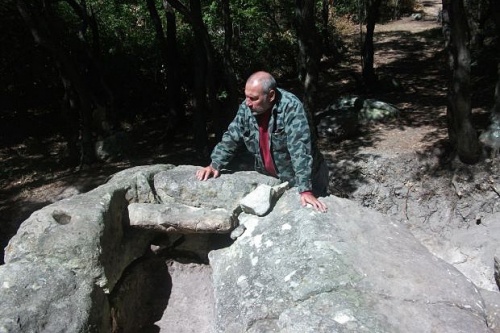
Bulgaria hopes to draw tourists intrigued by ancient tombs, mosaics and sewage systems later this year, thanks to engineers excavating a new line for the Sofia metro who stumbled across a street of prime real estate - from the 4th century AD.
Beneath modern Sofia lie the remains of Serdica, a lively, cosmopolitan city where Constantine the Great, the first Christian Roman emperor, lived for a year while looking for a new capital for his empire.
City officials plan to put an array of Roman remains on display in the next month, from bath houses to mosaics and tombs, and hope this will attract foreign tourists and help revive the Balkan nation's struggling economy.
Some 750,000 foreign tourists a year visit Sofia, and the opening of the new Roman attractions should increase this number, says Rumen Draganov, head of Sofia's Institute for Tourism Analysis and Assessment.
Until recently archaeologists wrongly regarded countries such as Greece, Italy and Turkey as the only classical areas worthy of study, said Philip Kiernan, Professor in Roman Archaeology of U.S. Buffalo University.
Emperor Constantine lived in Serdica for over a year while looking for a new capital in 316 AD as he could no longer effectively control his empire from Rome, a choice Kiernan said was based on Serdica's geographical position.
Little was known about his stay in the provincial city until a whole street of 4th-5th century AD houses were found during excavations for a new Sofia metro line.
A museum due for completion this summer will display the mosaics, early sewage systems and private bath houses of the ancient Romans who lived there, giving a flavor of the life of a provincial Roman nobleman.
Bulgaria hopes the remains of ancient Serdica will be one of the capital's biggest attractions, and aims to link the ancient Roman finds with remains from the medieval and Renaissance periods over an area of around 19,000 square meters.
Cafes and bookshops will be incorporated into the ancient complex, and visitors will also be able to explore the ruins through a marked path through the historic site.
Work is also forging ahead on an underground museum in one of the oldest functioning churches in Europe, which is due to open in September.
The Basilica of St Sophia dates back to the 5th century. Repeatedly destroyed and rebuilt, it served as a mosque during the Ottoman rule and is a remarkable mixture of Byzantine architecture, Islamic arches and Orthodox Christian icons.
Beneath the red-brick building, archaeologists found one of the first Christian catacombs. A well-preserved necropolis from the 4th century AD, containing around 100 tombs, will soon be ready for visitors.
Glass screens on the floor of the church will allow a view of the tombs from above, and narrow underground passages will allow visitors to explore the lighted crypts of the necropolis. Sofia has thousands of ancient sarcophagi scattered beneath the city center, and the tombs discovered below the church are thought to hold the remains of early Christian dignitaries.