Overtourism, Child Protection in the Crosshair of WTM London
The opening session of World Travel Market’s 2018 Responsible Tourism Program focused on “Business Taking Responsibility for Security, Health and Safety”.
Simon King, Founder of the South Africa-based organization Park Doctor, said that for tourism to deliver positive impact in the communities where it operates, companies need to change the way they look after guest health in remote areas.
Introducing the session titled ‘Creating Shared Value’, WTM Responsible Tourism Advisor Professor Harold Goodwin explained that the concept of Creating Shared Value (CSV) “responds to the rapid growth in market demand for experiences and creating additional products that support local communities. It is not CSR, but rather putting positive impact at the center of the way a business operates.”
Glynn O’Leary, Co-founder & CEO from South Africa’s Transfrontier Park Destinations (TPD), said he wanted to talk not about principles and policies, but about what shared value looked like in action.
TPD’s business model involves taking over the management of properties and business that have totally failed, and then integrating them with the local communities to make them successful, and doing this through developing local microenterprises, from artisans to food producers, to be suppliers to the lodges.
TPD owns nothing, keeping 100% of ownership with the local communities. He gave the example of TPD’s Khomeni-San owned !Xaus lodge, which is so remote that supplying yoghurt to the guests at breakfast involves a round trip of over 700km. Since working with TPD for the last 10 years, this once failed 24-bed lodge has generated over 40 million Rand in economic activity for its remote region.
Finishing the session, Derek Hanekom, Minister of Tourism, South Africa, said tourism needs to do more than just make a difference through creating economic opportunities.
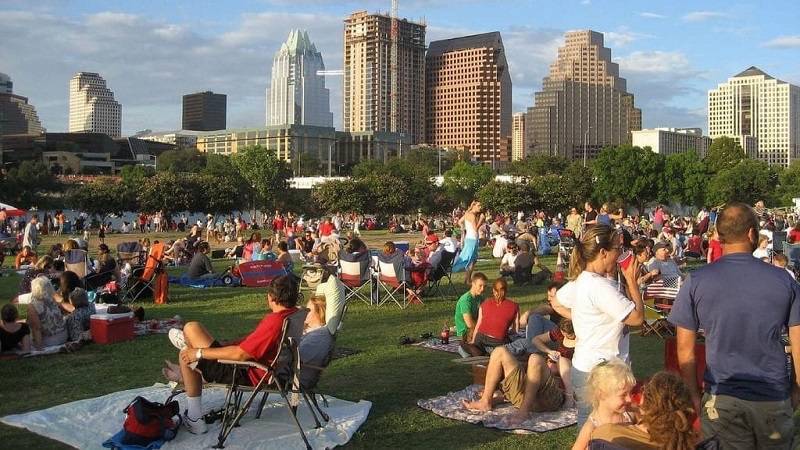
A session exploring the challenges of overcrowding, titled ‘Coping with Success in Major Cities’, brought together representatives from four of the most popular cities in the world – London, New York, Barcelona and Amsterdam.
Frans van der Avert, CEO, Amsterdam Marketing, described the ideal city as “livable, lovable, prosperous”, and said achieving that goal comes through finding the right balance between the needs of visitors, business and local people.
Laura Citron, Chief Executive, London & Partners, said their aim is to grow tourism in ways that are beneficial to Londoners. They do this by attracting A) tourists that are most beneficial to the city; B) Tourists who want to enjoy diverse attractions; C) People who will come at different times of year and use London at different times of day; and D) those who will travel all around the city and look to live like a local.
Asked who are the people who deliver those benefits, and who will behave that way, she answered: “Millennials from longer haul markets, with a culturally curious mindset,” adding that the city’s promotion is now exclusively focused on bringing those kinds of visitors.
In the afternoon, the responsible tourism program once again highlighted the range of issues associated with child protection. On the subject of volunteering in orphanages, Alex Christopoulos, Deputy Chief Executive, Lumos, said that: “promoting an orphanage draws in money and pulls children away from families to places where the needs of the organization take precedence over the needs of a child,” adding: “What is the alternative we can offer that enables people who want to help to feel good about themselves?”
Dr Krish Kandiah is Founding Director, Home for Good, a UK based charity finding permanent loving homes for the 80,000 children in care system. He was cautiously optimistic for progress on the issue.
On the one hand, he warned that: “If we just turned the money off to orphanages right now, that could put children in orphanages in greater danger. We need people to continue to finance child protection, but to do it by supporting viable, sustainable alternatives.”
What made him optimistic is that he felt that: “There is about to be a plastics-style revolution when it comes to orphanage care.” He said that just as ‘Blue Planet’ changed attitudes to plastic pollution ahead of government legislation, “it is exciting that the travel industry could be on the right side of this story.” As an example, he explained that research by his organization was surprised to learn that there are large numbers of millennials coming forward to foster children in UK, while they had assumed it would be mostly older people.
A session on ‘Partnerships for Change and Development’ saw representatives from across the industry explore how different organizations work together to effect change.
The final session of the day asked: “Is the industry reducing the plastic pollution it causes?” Sören Stöber, Director of Business Development ESG & Sustainability, Trucost, said that research by his organization into the economic cost of plastic pollution found that the ‘natural capital cost’ of plastic pollution was 75bn globally in 2015.
Jo Hendrickx, Founder of Travel Without Plastic, an organization which works with hotels and other travel organizations to remove plastic effectively and sustainably from their supply chain, shared research her organization recently conducted with 10 hotels in Gran Canaria, which found that the hotels used 6.6 million single use items a year, of which 15% were totally unnecessary and could be removed straight away.
Victoria Barlow, Group Environmental Manager, Thomas Cook, announced the company’s #NoPlaceforPlastics pledge, launched today at WTM, through which Thomas Cook has committed to remove 70 million single-use plastic items from its supply chain by 2020.
Measures range from removing plastic stirrers from the group’s airlines and straws from its hotels, to signing up several of its hotels to Travel Without Plastic’s online toolkit. She also announced a new partnership with the upcycling company Wyatt and Jack, who will be taking broken tourist inflatables from the company’s hotels and repurposing them it into new products.
Sherin Francis, CEO, Seychelles Tourism Board, explained that for her islands their main livelihood is tourism, and the industry relies upon the pristine natural environment. Last year therefore, the Seychellois government gave the islands’ businesses just six months until July 2107 to completely remove a wide range of single-use plastics from their supply chains.
Business requests for more time to adapt were declined, and the result was that within six months the islands had successfully transitioned – so that business as usual on the islands is now defined by use of the alternatives.
Concluding the day’s program, Ian Rowlands, Director, Incredible Oceans, observed how despite a growing body of research revealing the damage we are doing to the world’s environment, such as the WWF’s report from last week revealing that global wildlife populations have fallen 60% since 1970, and IPPC’s recent climate report that we have just 12 years to avoid catastrophic climate chaos, business and society is not transforming fast enough to meet these challenges to our very survival.
He said he hoped that the sea change in attitudes to plastic pollution caused by the ‘Blue Planet’ program had proved rapid systemic change was possible, and that engaging people in tackling this issue might offer a way to start making the urgent and radical changes necessary.