Saborea Puerto Rico: A Culinary Extravaganza Tour
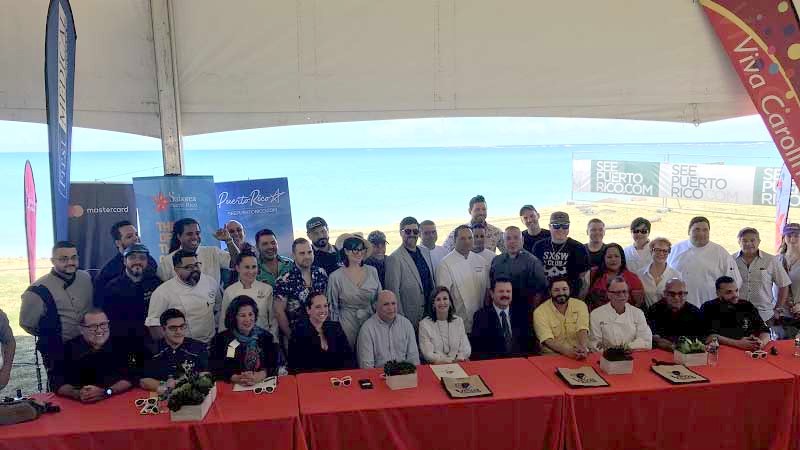
During a weekend, the Carolina municipality in San Juan, Puerto Rico became the seat of one of the most attractive and extravagant events in the Caribbean culinary world ... Saborea Puerto Rico.
Returning to Puerto Rico is always an invaluable experience, but if the reasons for the trip are related to events like Saborea Puerto Rico, then it becomes a must. Anyone has attended the event’s first edition ten years ago can notice the undeniable quality of this culinary extravaganza.
From April 5 to 8, thousands of people gathered under giant tents to taste and enjoy this festival of tastes organized each year by the Puerto Rico Hotel and Tourism Association (PRHTA).
Clarisa Jiménez, President of PRHTA bore out the value of the 2018 edition as a public success, considering that “Saborea Puerto Rico: A Culinary Extravaganza” was organized only six months after mighty hurricane Maria played havoc with the lovely island nation, pounding the country's infrastructure really hard.
According to reports from The Washington Post, the island had no power for 203 days, two hours and 29 minutes. Experts estimated that Maria caused about $45,000 million in damages throughout the Caribbean and, in Puerto Rico, at least $30,000 million in losses, said Chuck Watson, a disaster modeler in Savannah, Georgia.
Official data published on April 3 indicate that 89.2% of the country has electricity and 95.8% of customers (1,411,086) have had power restored in their households. The 78 municipalities have electricity at least partially and approximately 62,000 customers still have no power supply.
After sharing these figures, the quality of events such as Saborea Puerto Rico gains more value. Given the special conditions and the fact that this Caribbean nation has made gone the extra mile to get this event going, then Saborea has been a huge success; make no mistakes about it.
Carolina: Host of Saborea Puerto Rico
This edition was celebrated in the municipality of Carolina, San Juan’s foreshore area and considered the largest urban beach in the Caribbean. The Autonomous Municipal Government of Carolina forked over some $1.5 million for the total reconstruction of the beach, that wound up inoperative after the passage of Maria and that reopened officially for Saborea Puerto Rico.
The reconstruction of the beach area also brought along the reopening of the Aquasol Park. The beach has been fully recovered after the hurricane, although some hotels are still under construction, such as the Embassy Suites San Juan, which keeps half the hotel closed while the second half undergoes an all-out renovation.
The area of ??Carolina is a tourist and condominium area, has that large beach that offers a view of the city and the bay of San Juan very beautiful only 15 minutes from the Historical Center and ten from the airport.
Saborea Puerto Rico Inside
The event highlighted the participation of sponsors such as telecommunications company Sprint, which installed a kiosk for attendees to acquire phones and accessories offered by this brand.
“Saborea is an event for the whole family that has put Puerto Rico on the map in the world of gastronomy,” said Juan Saca, CEO of PR Wireless, the company that manages Sprint brand Boost Mobile, in a press release.
On the other hand, the presence of the secretary of the Department of Agriculture (DA), Carlos Flores, who called five companies from the agricultural sector to join the eleventh edition of the event, was vital. Borges Meat, Agropeck, Microgreens of the Caribbean, Semila and Empresas Bobet were actively involved in the event sponsored by the DA through the Fund for Innovation in Agricultural Development (FIDA).
“We establish this important alliance to guarantee to the consuming public that our chefs support the Puerto Rican agribusiness entrepreneur and make their delicious menus with fresh agricultural products grown in the country,” said the secretary.
In fact, in the tents there was availability of mini-gardens with fresh products, such as coriander and ginger, available to more than 70 local restaurants that gathered on the beach to showcase their gastronomic products in Saborea Puerto Rico.
The image of a group of awnings -with large tables in the center to taste the dishes prepared in the central tent-, the massive turnout of public and the Puerto Rican spirit conveyed by more than 20 international and national chefs; They build an authentic concept of this great culinary event.
The rational and sustainable use of natural resources, as well as the investment in local development, became the axis of this great culinary event. Agricultural production focused on the use of restaurants and resorts on demand rekindles the local development of a country that must recover its economy.
Other sponsors, such as Delta Air Lines and MasterCard, chipped in to the event’s success with offers and discounts. The credit and debit card company applied discounts of 20% off for all those who paid with these cards the rate of entrance that provided access to all the drink and food.
By all accounts, this is a very interesting event as it brings local gastronomic culture together with international knowledge, and welcomes Puerto Rican chefs who work outside the country. For example, the presence of Giovanna Huyke -who starred a television show for more than 20 years- and manages a Caribbean-style restaurant in Boston.
This is the most important culinary festival in the Caribbean by number of attendees and the quality of the participating chefs. There is a well-rooted Puerto Rican gastronomic concept. The use of soundproofing ice crushers, micro-diffusers of water to refresh sweltering temperatures under the tents and the sustainable concept of management of agricultural resources show a clear path of environmental commitment and sustainable development in events of this type.
It would be nice to read, in a short time, news about culinary events parallel to Saborea Puerto Rico in a bid to foster the work of farmers. We could also think about the creation of a Gastronomy Academy in Puerto Rico.
The culinary culture of the Caribbean islands is strengthened with strategies of this type. Empowering the intangible heritage, highlighting the culinary traditions that tell us apart and, at the same time, unite us, become clear goals to place countries like Puerto Rico on the map of Iberian-American gastronomy.