American Airlines Takes Financial Nosedive, Files for Chapter 11
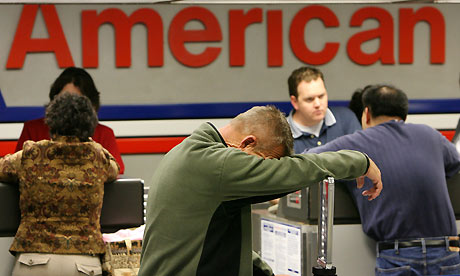
American Airlines Takes Financial Nosedive, Files for Chapter 11
For the 240,000 passengers who fly American Airlines each day, the airline's bankruptcy filing should have little noticeable impact. American's operations were running normally on Tuesday. The airline said it will continue to operate flights, honor tickets and take reservations.
Delta, United, Continental and US Airways have all gone through Chapter 11. Travelers continued to book tickets. Planes still took off and landed and frequent flier miles were still earned and redeemed. In fact, the bankruptcy process is usually more troublesome for the airline's shareholders, who tend to get wiped out.
Thomas Horton, the new CEO of AMR Corp., American's parent company, said Tuesday that the airline may reduce its flight schedule "modestly" as it restructures in bankruptcy court, where it aims to reduce its hefty debt burden and labor costs. The only real risk to American's passengers is if the restructuring fails, the airline ultimately liquidates and ceases to fly. Even then, many travelers are protected if they bought tickets with a credit card.
American is the nation's third-largest airline behind United Continental Holdings Inc. and Delta Air Lines Inc. It operates out of five major hubs in New York, Los Angeles, Dallas/Fort Worth, Chicago, and Miami. It has major international partnerships with British Airways and Japan Airlines.
American was the world’s biggest airline as recently as 2008, but has fallen behind as United merged with Continental Airlines and Delta Air Lines merged with Northwest. Ray Neidl, an analyst with Maxim Group LLC, said American might be pushed into a merger with US Airways.
American has continued to lose money while other US airlines returned to profitability in the last two years. AMR has posted annual losses three years in a row, including a $471 million loss last year and a $982 million loss through the first nine months of this year.
Newer low-cost carriers such as JetBlue Airways and Southwest Airlines have also put increasing competitive pressure on legacy carriers. As competition intensified, AMR responded by borrowing more, eventually pledging nearly all of its assets and leaving it heavily indebted.
Speculation about an AMR bankruptcy grew in recent weeks, as negotiations with pilots and other workers over cost-saving labor contracts seemed to stall. The company said that labor-contract rules forced it to spend at least $600 million more per year than other airlines.