Spring Break, Recession Style: Staying Close to Home
It’s been a tough season for spring break destinations. With students and parents tightening their belts in the face of a major recession, the annual tradition of letting off steam –ideally on an exotic beach, with access to plenty of cheap beer- is suffering.
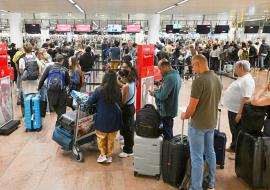
This spring break season –typically, March 16 to April 5- flights from the U.S. to the Caribbean have dropped as much as 20 percent, according to data compiled for TIME by the online travel agency Expedia.
Meanwhile, safety concerns over Mexico’s increasingly violent drug cartels may be helping keep students away from its beaches in droves; travel to the spring-break Mecca of Cancun is down 22 percent over last year. (See pictures of the history of Mardi Gras.)
But that doesn’t mean spring break is canceled. When it comes to scaling back expenses, that’s where many college students are drawing a line in the sand. Sun-drenched revelers are spending less, and service-oriented spring breakers are reaching out to communities closer to home.
For many, that means forgoing a far-flung trip –which can cost upwards of $1,000- and soaking up some less exotic rays. According to Expedia, spring break flights to Orlando, Los Angeles and New York all jumped more than 25 percent this year.
Affordability may also help explain why service-oriented spring break trips, which can cost as little as $300, are more popular than ever this year. At St. Michael’s College in Burlington, Vermont, applications doubled for trips to serve in soup kitchens or build homes around the country and abroad. Harvard’s alternative spring break program recorded a 90 percent increase in applications.
And Break Away, an organization that helps coordinate service-oriented break trips for over 150 college campuses nationwide, has tracked a 10-15 percent increase in participation for the sixth year in a row.
Some students, however, are less able than they used to be. The University of Maryland, Baltimore County, for example, sent some spring-break volunteers to Kentucky last year to help rebuild an elderly woman’s home after it burned down.
Other alternative break trips are being refocused to help people especially affected by the recession. About two dozen schools, for instance, have retooled their Habitat for Humanity-style affordable housing trips to focus on rehabilitating foreclosure homes instead.
There are other students, of course, who are simply staying home. Melissa Bubb, 20, a junior marketing major at Temple University, took a bus home to Brooklyn, New York, where she spent spring break visiting her grandmother and catching up with high school friends.