



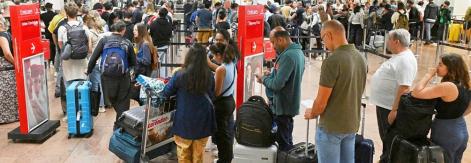
According to the findings from YouGov Siraj’s Travel Tracker update, a research tool which tracks travel trends quarterly, the amount people are flying from the UAE remained stable in 2008 compared to 2007 but this falls far short of how much they had been expecting to travel. In October 2008, around half of business and leisure travelers were expecting to see an increase in travel.
St. Kitts remains on target to fulfill its long-term plan for the sustainable development of its tourism sector with various projects that continue to move forward, even within the context of the current global economic climate.

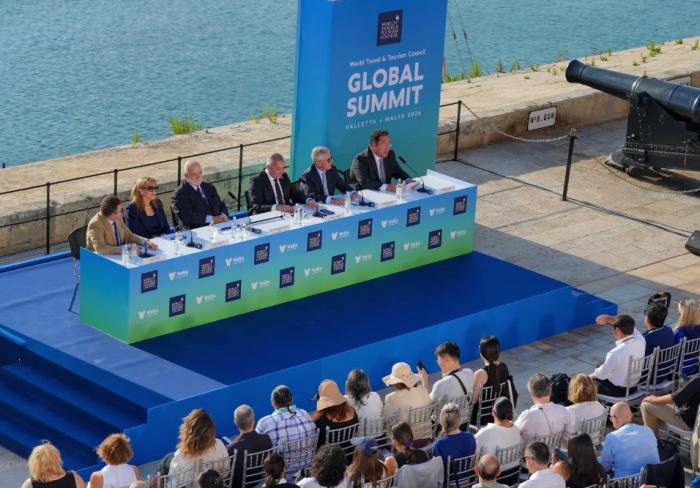
Members of the World Travel & Tourism Council (WTTC) met with the Brazilian Minister of Tourism Luiz Barretto, and Embratur’s President Jeanine Pires, along with high-level representatives of the Brazilian state of Santa Catarina and other key business leaders, to unveil the theme of the Ninth Global Travel & Tourism Summit: “Real Partnerships - Energizing Economies.”
The number of tourists visiting European destinations in 2009 is expected to contract slightly and, given the current economic environment, things could get worse. However, Europeans earning in euro who retain their jobs in the economic slump will find non-eurozone destinations more affordable.
These are the initial findings and predictions from the ITB World Travel Trends Report 2009, which will be presented during the world’s leading annual travel show, ITB Berlin, on 11 March during the Future Day of the ITB Convention, and will be published before the end of the same month.
The report, produced by IPK International, suggests that new tourist arrivals records are likely to be broken 2011-2012.
IPK says final tourism figures for 2008 are still being collated. However, after a record year for many European destinations in 2007, it seems the deterioration in European economic performance and confidence in Q3 & Q4 2008 will mean that Europe’s overall inbound growth for 2008 will struggle to reach 1 percent.
European Travel Commission data shows that Bulgaria, Turkey, Latvia and Slovakia recorded double-digit increases in arrivals for most of 2008. Austria, Croatia, Estonia, Germany, Ireland, Malta, Montenegro, Sweden and Switzerland were also doing better than average up to November.
As the economic slump took hold worldwide, Europe’s appeal faded fastest in long-haul source markets. ETC estimates suggest that arrivals from the U.S., Japan, China and South Korea were down last year. In contrast, visitors from India to Europe were not deterred. Some destinations saw double-digit growth from this market.
UNWTO Assistant Secretary-General Geoffrey Lipman stressed that “tourism has only scratched the surface of our clean, green potential –now it’s time to mainstream it,” and called on the tourism sector to get squarely behind the Green New Deal- in industry structures, and operations and to build the quadruple bottom line into all policies and programs, adding climate to economic, social and environment fundamentals in the sustainability equation. This is to be underpinned with a massive ICT expansion and public/private sector collaboration to enhance efficiency. Lipman also urged that the industry account properly for impacts –linking Tourism Satellite Accounting with mainstream green economic and carbon impact measurement and promote its commitment with key audiences. With policymakers shaping the transformation, putting together short-term economic stimulus packages and long-term development support funds for climate adaptation, trade strengthening and technology transfer. And with consumers, suppliers and destinations linked in the tourism chain.
As the Caribbean islands enter the height of tourist season, which runs from now through March, sun-deprived travelers flock to the islands for the region’s idyllic weather and alluring beaches, prices soar to peak levels and resorts fill up well in advance.