Allegiant, Sun Country Complete Landmark $1.5 Billion Low-Cost Merger
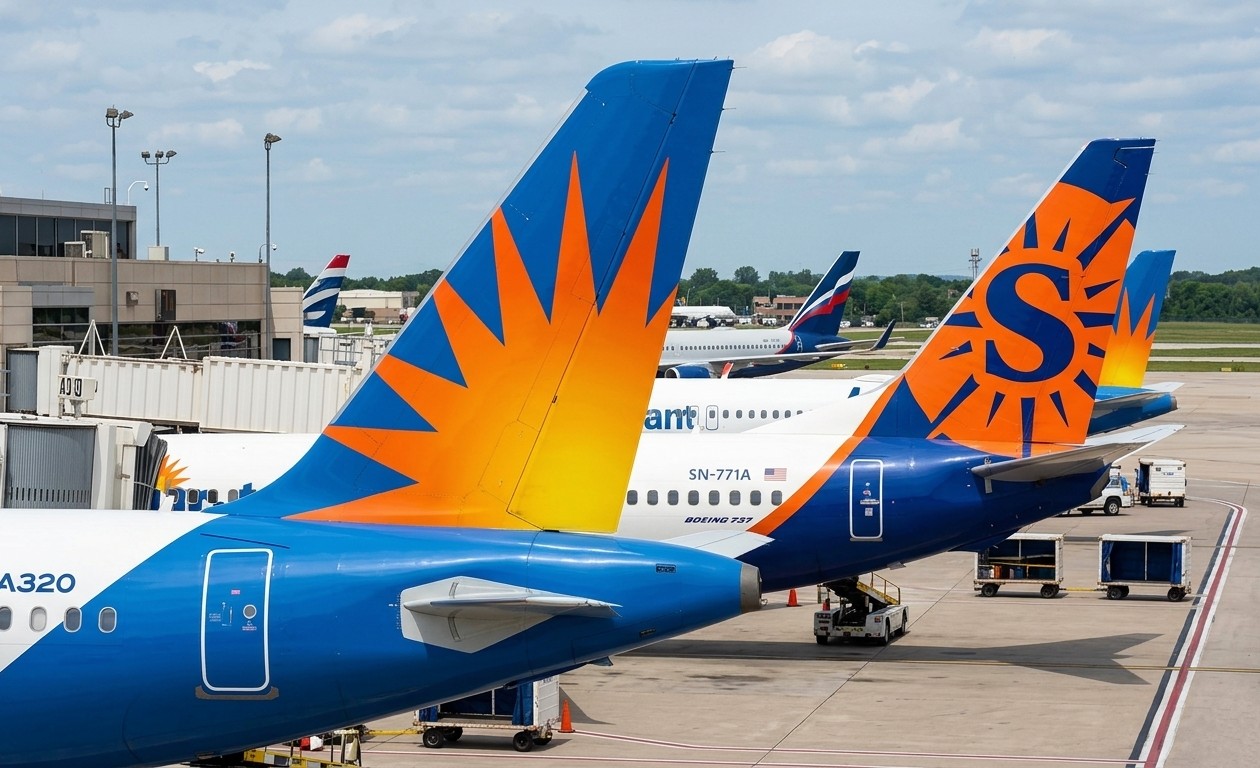
The North American aviation industry has undergone a major structural consolidation following the official completion of the $1.5 billion merger between Allegiant Air and Sun Country Airlines.
The massive corporate transaction creates a unified ultra-low-cost carrier network that officially ranks as the fifth-largest airline in the United States by overall passenger volume. The combined entity will maintain a massive fleet footprint, fusing Allegiant’s extensive leisure-focused network with Sun Country’s robust scheduled service and cargo operations.
The closing of this transaction is a mechanical necessity for both niche carriers to achieve the critical mass required to survive escalating operational costs and intense competitive pressures from legacy network airlines. Throughout the early months of the year, independent low-cost operators have faced severe margin compression due to skyrocketing pilot wages and volatile fuel prices. By blending their unique business models, the combined carrier can now optimize aircraft utilization, shifting planes seamlessly between seasonal peak holiday routes and steady commercial cargo contracts.
The corporate integration strategy outlines that both brands will initially continue to operate under their respective public banners to preserve localized brand loyalty and distinct marketing channels. Allegiant’s traditional focus on linking underserved small-town domestic markets to warm-weather vacation hubs will be bolstered by Sun Country’s strong midwestern hub presence at Minneapolis-Saint Paul International Airport (MSP). The combined management team expects to realize over $150 million in annual synergistic cost savings through consolidated administrative and maintenance systems.
The merger has triggered immediate reactions from federal regulatory bodies and consumer advocacy groups, who are monitoring the impact on secondary market ticket pricing. To secure final antitrust clearance from the Department of Transportation, the carriers agreed to specific slot divestitures at congested secondary gateways to ensure healthy regional competition. Despite these concessions, industry analysts predict that the reduction in independent low-cost seats will inevitably lead to a firming of base fares across competitive holiday corridors.
Operationally, the combined airline faces the daunting task of integrating two entirely different aircraft fleet structures. Allegiant’s network relies heavily on an Airbus A320-family and incoming Boeing 737 MAX layout, while Sun Country operates an exclusive fleet of Boeing 737 Next-Generation aircraft. Resolving pilot seniority lists and standardizing maintenance technician training protocols will serve as the primary focus for corporate operations managers over the next 18 to 24 months to ensure seamless fleet interchangeability.
The completion of this merger is expected to ignite a fresh wave of consolidation rumors across the remaining independent ultra-low-cost sector. As market dynamics continue to reward scale and capital efficiency, smaller regional carriers are finding it increasingly difficult to operate independently against massive legacy competitors. The creation of this new fifth-largest domestic airline fundamentally alters the competitive landscape, forcing regional airport authorities to renegotiate long-term gate leases and promotional incentives to retain service.