Global Aviation Industry Reels as Jet Fuel Prices Hit $200 Per Barrel
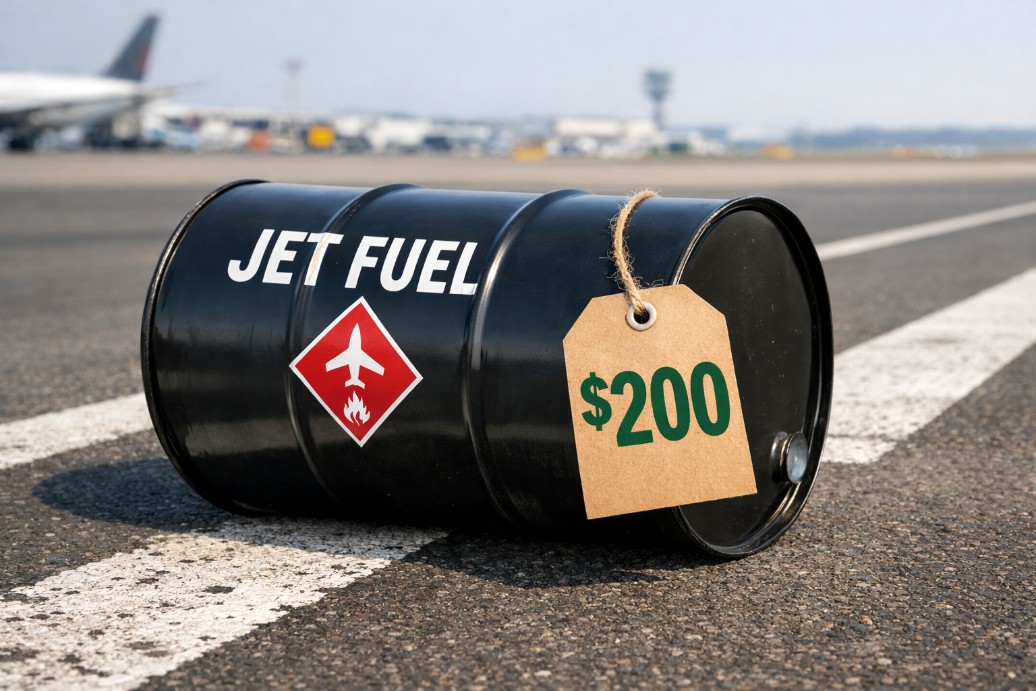
The global aviation sector is facing a severe financial crisis today as jet fuel prices have skyrocketed to nearly $200 per barrel due to escalating geopolitical tensions in the Middle East.
Major carriers including Delta, Southwest, American Airlines, and Alaska Air have responded immediately by implementing aggressive fee hikes and ticket price increases. Most notably, checked baggage fees for first bags have risen to $45, while fees for a third bag have jumped to a staggering $200 on several North American routes. This sudden operating expense surge has forced many airlines to revise their financial outlooks and warn of potential flight reductions to maintain viability.
International carriers are also taking drastic measures to offset the exponential rise in fuel costs. Air France-KLM announced plans to increase long-haul ticket prices by approximately 50 euros per round trip, while AirAsia X has already cut 10% of its flights and added a 20% fuel surcharge. In India, Air India and Akasa Air are shifting to distance-based grids for surcharges to better align revenue with actual fuel burn. This volatile market has disrupted the industry's recovery momentum, as fuel traditionally accounts for a quarter of total operating costs.
The Airports Council International (ACI) issued a warning today regarding a potential systemic jet fuel shortage in Europe if supply routes remain blocked for another three weeks. This scarcity threatens to compound the macroeconomic damage already caused by the price spikes, potentially leading to widespread flight disruptions just as the peak summer season begins. The ACI has called on the European Commission to establish a monitoring system for fuel availability and consider collective purchasing to safeguard connectivity. Travelers are being advised to expect higher fares and more frequent schedule changes in the coming weeks.
These developments represent a significant increase in the total cost of travel. Beyond base fares, the proliferation of carrier-imposed surcharges is making transparent pricing increasingly difficult for consumers to navigate. Airline executives emphasize that these "mechanical necessities" are the only way to "protect the bottom line" without compromising operational safety. The focus has shifted from growth to yield management and fuel efficiency, as carriers prioritize their most profitable hub-to-hub routes to minimize waste.
The impact is also being felt in the cruise sector, which relies heavily on North American guests flying to European homeports. If airfare and baggage fees continue to climb, cruise lines may see a dip in long-haul bookings for the upcoming Mediterranean season. The interdependence of aviation and tourism has never been more apparent, as a crisis in the skies immediately ripples through hotel and tour operator balance sheets. Industry analysts are closely watching the crude oil market for any signs of stabilization that could provide relief to the global transport network.
Ultimately, this fuel crisis is forcing a "hard reset" on the industry's expectations for 2026. While demand remains strong, the willingness to pay is being tested by the rapid accumulation of extra costs. Airlines are accelerating the transition to Sustainable Aviation Fuel (SAF) and more efficient next-generation aircraft, but these are long-term solutions for a short-term emergency. For now, the 2026 travel landscape is defined by fiscal caution and a desperate search for alternative energy security.