
IATA Confirms "Digital Identity" Readiness with Milestone Trials
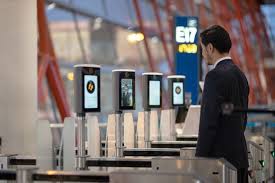
The International Air Transport Association (IATA) announced the successful completion of "proof-of-concept" trials today, proving that the aviation industry is "fully ready" for contactless international travel.
The trials demonstrated that Digital Travel Credentials (DTCs)—secure digital versions of physical passports—can replace traditional paper documentation at every airport touchpoint. These "biometric-enabled journeys" were tested across multiple carriers, including IndiGo in India, and integrated with digital wallets such as Apple Wallet and Google ID Pass.
The success of these trials marks a "pivotal moment" in the 2026 travel technology roadmap, moving "digital identity" from a "vision to a reality." By sharing data securely ahead of time, travelers can complete pre-travel checks remotely, drastically reducing the "physical document handling" and "airport queues" that have plagued major hubs this year. IATA is now calling on global governments to "accelerate the issuance and acceptance" of DTCs to ensure that the "infrastructure for modernization" is supported by "regulatory frameworks."
The biometric verification systems used in the trials proved to be "secure, efficient, and interoperable," allowing for a "seamless experience" even when switching between different airlines or digital wallets. This "technological evolution" is particularly vital for high-traffic airports looking to "optimize passenger flow" without expanding their physical footprint. As "secure data sharing" becomes the norm, the "stress of the airport" is expected to "decrease significantly."
Despite the "technical triumph," the widespread rollout of digital identity faces "legislative hurdles" in several jurisdictions where "data privacy laws" are still being reconciled with biometric technology. IATA emphasizes that "user consent" and "data protection" are the "foundation of the system," ensuring that travelers only share the "minimum data required" for their journey. As the "industry scales" these solutions, the 2026 traveler will see a "phased transition" where "paper-based alternatives" remain available for "accessibility and backup." This "hybrid era" marks the beginning of a "new standard" in global mobility.