2026 World Cup Becomes Most Expensive in History as Dynamic Pricing Fuels Soaring Fares
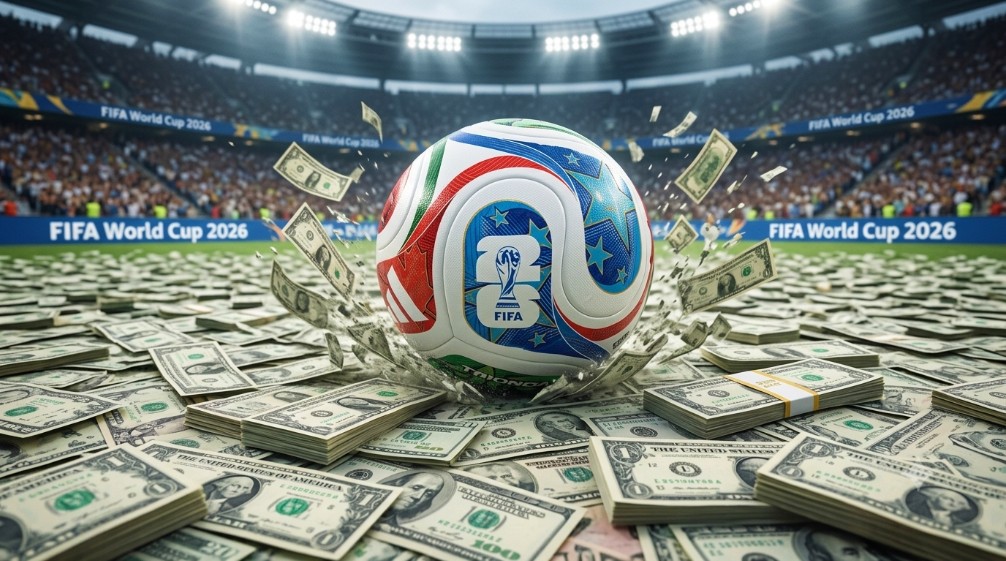
The highly anticipated 2026 FIFA World Cup is ready to make history across North America, but soccer fans are facing a harsh reality as ticket prices skyrocket to unprecedented heights. Co-hosted by the United States, Canada, and Mexico, the expanded 104-match tournament has drawn immense controversy over its whopping financial barrier to entry. From the historic opening match at the Estadio Azteca to the highly coveted final at MetLife Stadium in New Jersey, everyday supporters are finding themselves aggressively priced out of the beautiful game.
For the first time in tournament history, FIFA has implemented dynamic pricing, a real-time revenue strategy more commonly utilized by airlines and major concert tours. Under this model, face-value tickets fluctuate instantly based on public demand, causing immediate price spikes for marquee fixtures.
While a limited number of lowest-tier seats were technically allocated at $60 through national federations, general public entry for a standard group stage match quickly ballooned into an average range of $120 to $1,200. The fiscal mountain only grows steeper for games featuring the host nations, where Category 1 seats for the United States men's national team opening match against Paraguay at SoFi Stadium in Los Angeles reached face values as high as $2,735, topping out at over $4,105 on primary sales channels.
The inflation becomes even more staggering when compared to the last time the United States hosted the tournament in 1994. Three decades ago, a fan could witness a group stage match for as little as $25, while premium seats for the final at the Rose Bowl topped out at $475. In stark contrast, general public face-value tickets for the July 19 2026 final are listed between $2,030 and $7,875.
The gap widening between the historical iterations of the North American tournament underscores a massive structural transformation in the commercial economics of global sports, shifting the target audience from traditional families to corporate entities and ultra-affluent travelers.
As the tournament moves deeper into the knockout rounds, the prices scale exponentially. Tickets for the semifinal matches at Mercedes-Benz Stadium in Atlanta and AT&T Stadium in Dallas are demanding anywhere from $420 for upper-tier access to an astonishing $11,130 for Front Category 1 positioning. Analysts warn that a fan attempting to follow a specific team from the opening whistle through to the championship match could easily shell out over $7,000 in face-value tickets alone, completely independent of the necessary cross-border travel logistics.
The primary market, however, is only half the battle, as the secondary resale market has mutated into a speculative gold rush. On approved platforms, the asking prices for the championship game in East Rutherford have routinely cleared the $9,200 threshold for baseline admission, with some premium luxury suites listed at eye-popping figures. This uncontrolled escalation has triggered severe backlash from international supporters, prompting viral ad campaigns from airlines highlighting that it is now considerably cheaper to buy a round-trip ticket to vacation in Europe than to purchase a single seat at a local World Cup stadium.
With the tournament ready to take center stage alongside other major domestic sporting events like the NBA Finals, the conversation has shifted from tactical team lineups to the sheer cost of attendance. The combination of modern NFL facilities optimized for luxury corporate suites, premium hospitality packages, and intense localized demand has guaranteed record-breaking revenues for FIFA.
Yet, as the three host nations prepare to open their borders to the world, the sheer financial reality of the event risks transforming what was once a global celebration of unity into an exclusive entertainment extravaganza reserved strictly for the highest bidder.