
4 Trends That Are Changing Cuisine in the Hospitality Industry
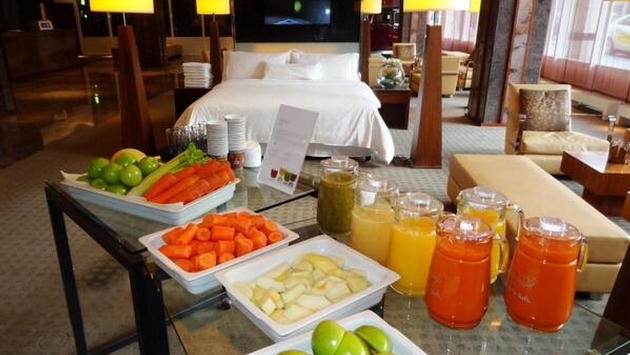
Hospitality companies learned long ago that good food means good business. But as customers have evolved, so have hotels and their accompanying restaurants. Just like anything in the industry, you must be flexible and address the ever-changing needs and desires of travelers. You can’t stay stagnant, as an hotelier or a chef, or the world (and business) will pass you by.
TravelPulse recently spoke with Brian Povinelli, SVP Global Brand Leader for Westin and Le Meridien, and Executive Chef Robert Conrad of Outrigger Laguna Phuket Beach Resort to get the lowdown on food trends in the hospitality industry.
Here are some trends they highlighted.
Healthy and Organic Eating
More and more guests are eating healthier and expecting hotels and resorts to accommodate.
It used to be a select few would be picky when it came to what they ate. Now, it’s fairly commonplace for many guests to expect organic and fresh food.
The Westin and Le Meridien brands have been pioneers in accommodating this growing need. Westin entered into a partnership with SuperFoodsRx in 2007 to provide healthier and nutrient-rich meals. The Element by Westin brand is a brand based specifically on health and wellness. The first Element hotels opened way back in 2008 before the health and wellness craze really got going. Now, the wellness industry is booming.
“One of the more prevalent that we’re seeing, especially in our hotels, is healthy eating,” said Brian Povinelli, SVP Global Brand Leader for Westin and Le Meridien. “More and more people are taking more personal responsibility for the way they eat and becoming more demanding in the expectations they have in restaurants and food and beverage outlets.”
“We’re getting much more pointed in saying wellness is the foundational platform for Westin,” Povinelli added.
Not only did Westin enter into a partnership with SuperFoodsRx in 2007, the brand introduced a healthy kids menu earlier this year. That includes completely eliminating unhealthy foods such as French fries, hamburgers and soda.
“We’re looking to be the leader and really go after this more aggressively than others have shown,” Povinelli said.
Executive Chef Robert Conrad of Outrigger Laguna Phuket Beach Resort agrees.
“People have become more and more concerned about health and they tend to eat more healthy food,” Conrad said. “In Phuket, we have more vegetarian (options), more guests require gluten-free meals and more guests have special diets. Organic food has become more and more popular.”
“This is very interesting because before nobody really cared what they were eating,” Conrad added. “People are much more attentive about what they are eating.”
Outrigger Laguna Phuket uses food from its own vegetable garden, which it installed about eight months ago.
“The response from our guests is very good,” Conrad said. “They appreciate it. We have a lot of compliments about that.”
Note: Interestingly enough, Povinelli said this healthy eating trend hasn’t extended to mini-bar purchases. The candy bar is still the most popular item. “Maybe because it’s more of an impulse-and-indulge-type purchase,” he posited.
Coffee, Tea, Fresh-Pressed Juices
While coffee and tea have always been standard offerings in the hospitality industry, guests desire coffeehouse environments now.
“It’s more than wanting a good cup of coffee,” Povinelli said. “They’re wanting that coffeehouse atmosphere and really looking at a more holistic experience around coffee.”
Le Meridien has a partnership with Italian coffee company Illy. Illy not only focuses on creating great coffee, but it also works to create a coffee culture. Le Meridien employees at select properties are specially trained and certified to serve the Italian-style beverages.
By the end of 2014, all Le Meridien hotels will have a master barista on staff, “really serving as that ambassador,” Povinelli said.
“A good barista creates dialogue and knows their customers,” Povinelli added.
It’s not just about coffee, though. Guests are also expecting an elevated experience around tea. And while fresh-pressed juices have been popular in hotels in America for a while now, Povinelli said the demand has grown significantly internationally in the last year or so.
Japanese/Chinese Food
While Japanese and Chinese food has been a common offering for restaurants throughout the years, Conrad has seen a growing demand for the cuisines in the last few years, in Thailand and beyond.
“More and more people like to eat sushi and sashimi,” Conrad said. “Japanese restaurant prices are much more reasonable than they were 15 to 20 years ago…In last three to four years, it has become very, very popular. Some of the major hotels have quite expensive Japanese food with Japanese chefs. The food is easy to eat and it pleases the palate of the local people of Asia.”
Chinese food is also being offered prominently in hotel kitchens now.
“Chinese food, we should not forget, has become more and more popular,” Conrad said. “There are more Chinese traveling around Asia. At (Outrigger Laguna Phuket), we hire Chinese chefs because we realize the importance of Chinese food. For about four to five months of the year, our hotel is heavy occupancy as far as Chinese. These young Chinese people…now they can travel because now they have the financial ability that they didn’t have 10 years ago and then they have the opportunity to do it, as before they couldn’t.”
Outrigger Laguna Phuket Beach Resort’s on-site restaurants Locavore and Edgewater specialize in Asian cuisine.
Presentation
Of course, it’s not just about the food itself.
More guests appreciate the presentation of a plate now, too.
“There’s a surprisingly growing expectation of presentation,” Povinelli said. “Where in the past you could get away with not being as thoughtful with the way the food is plated, I feel people really appreciate when it’s done well now. Where in the past it was all about, “Does the food taste good?” and you’re fine, now there’s an expectation that it tastes good and it’s presented in a unique or stimulating way.”
Interestingly enough, Povinelli said he believed social media has been a big driver of this trend. Social media channels such as Instagram are rife with images of food. Heck, some Instagram users post photos of only food.
“The industry has woken up to this,” Povinelli said. “It can be good publicity for me if I can get people engaged enough in their meal to put it out on their social media channels.”
This trend was virtually non-existent five years ago, he added.