Early Sargassum Surge Threatens 2026 Caribbean Beach Season
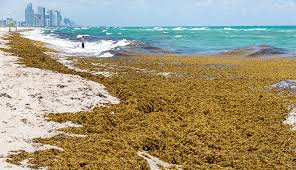
A major travel alert was issued today, February 4, as new satellite monitoring data from the University of South Florida reveals an unusually early and heavy surge of Sargassum seaweed heading toward Caribbean shores.
Above-average concentrations of the brown macroalgae have already been detected in the central Atlantic, with early accumulations reported on beaches in Barbados, Dominica, and the French Antilles. This "early bloom" suggests that 2026 could see one of the most extensive sargassum seasons on record, potentially peaking months ahead of the traditional summer window.
The impact is already being felt in popular hotspots like Tulum and the Riviera Maya, where significant seaweed landings were documented throughout January. In the Dominican Republic, Bavaro Beach has also seen early signs of the brown mats, prompting local authorities to activate cleanup crews weeks earlier than planned. For the tourism-dependent region, these early influxes present a serious operational challenge, as the presence of decomposing seaweed can deter swimmers and create a pungent odor that degrades the "pristine beach" experience.
Beyond the aesthetic concerns, the sargassum surge carries significant environmental and economic risks. Decaying seaweed can deplete oxygen in coastal waters, harming coral reefs and local fish populations, which in turn impacts the livelihoods of local fishing communities. In Saint Lucia, fishers have voiced concerns that large mats are entangling equipment and slowing vessels, threatening the island's food security and traditional maritime culture alongside its tourism sector.
Resort operators across the region are responding with "preventative defense" measures, including the installation of floating barriers and the deployment of specialized seaweed-collection boats. However, these solutions are costly and can be overwhelmed by the sheer volume of a "major bloom" year. Some high-end resorts are now integrating "Sargassum Status" updates into their guest apps, offering transparency and suggesting alternative inland excursions—like cenote tours or rainforest hikes—when beach conditions are less than ideal.
For the 2026 traveler, the "seaweed shadow" makes travel insurance and flexible booking policies more important than ever. Experts advise travelers to check recent satellite maps or local beach cams before departure and to consider destinations on the "leeward" sides of islands, which are often naturally shielded from the heaviest Atlantic deposits. As the climate-driven phenomenon becomes a "new normal," the industry is moving toward a model where "beach days" are no longer guaranteed, even in the heart of paradise.
Official agencies like NOAA will provide updated forecasts later this month, but the current data indicates that 2026 will be a year of "adaptive management." The Caribbean’s ability to handle this early surge will be a litmus test for the region's long-term resilience. While sargassum is a natural occurrence, its increasing frequency and intensity serve as a stark reminder of the environmental complexities facing tropical tourism in the mid-2020s.