American Eagle Moves Toward Spin-Off as Independent Company
American Eagle Moves Toward Spin-Off as Independent Company
By Kate Rice
AMR Corporation, the parent company of American Airlines, Inc., announced that its subsidiary, AMR Eagle Holding Corporation, has filed a Form 10 Registration Statement with the U.S. Securities and Exchange Commission, marking the next step in a potential spin-off of Eagle as an independent company.
In the spin-off, AMR Corporation would distribute to its stockholders 100 percent of the outstanding shares of Eagle on a pro rata basis, and AMR Corporation would not retain any ownership interest in Eagle.
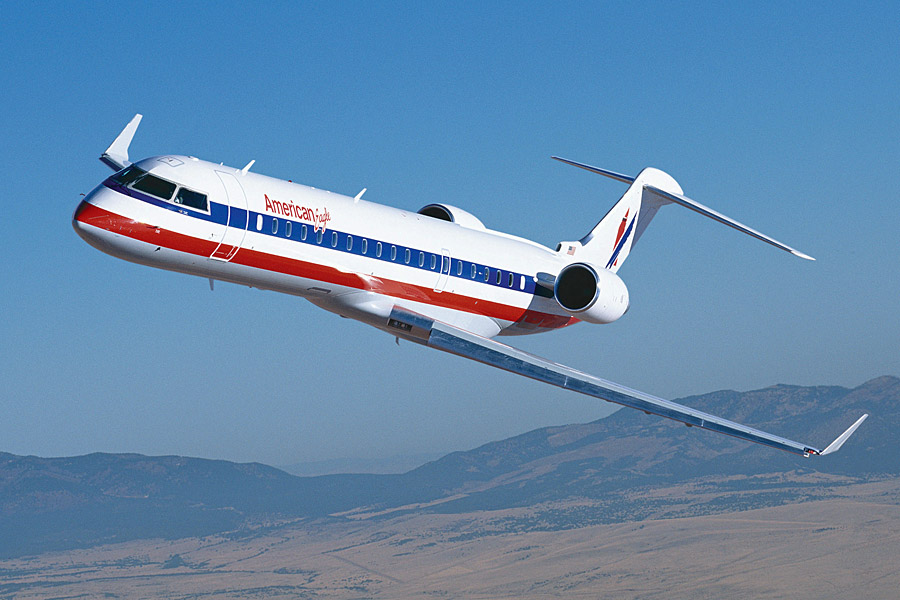
On a pro forma basis, in 2010, Eagle generated $1.2 billion in revenue with more than $250 million from ground handling services. Eagle would operate the third-largest regional airline in the United States as it provides the vast majority of American's regional flight operations. Under a nine-year air services agreement with American, Eagle would initially operate 281 aircraft on behalf of American.
American could withdraw from Eagle and re-bid up to 12 turbo-prop aircraft per year beginning in 2012 and a specified number of jet aircraft up to 40 per year beginning in 2014. The agreement would also include a provision to re-set rates to reflect any change in market levels for regional feed after four years.
Eagle would also operate one of the largest ground handling operations in the U.S., serving American Airlines and other passenger airlines at more than 100 airports in the U.S., the Bahamas, the Caribbean and Canada.
Under a ground handling agreement, Eagle would provide ground handling services to American at 106 airport locations. The agreement would have an eight-year term, but provide American the right to re-bid ground handling services at a specified number of airports each year.
AMR and Eagle believe a spin-off of Eagle as a separate, publicly traded company would offer a number of benefits that would enable American to diversify the source of its regional feed over time; would allow Eagle to grow its business by better competing to offer regional flight services to other mainline carriers; and would allow each company to allocate resources and deploy capital in a manner consistent with its strategic priorities in order to optimize total returns to shareholders.
While all aircraft will remain on Eagle's operating certificates, prior to any divestiture, the company expects to transfer to American all of its jet aircraft and the associated indebtedness, on which AMR is already a guarantor. Ownership of the jet aircraft would provide American control over the regional aircraft that are pivotal to its network and would protect AMR's position as guarantor of the debt.
The spin-off of Eagle would be subject to certain conditions, including U.S. Securities and Exchange Commission (SEC) clearance, receipt of regulatory approvals, an opinion from tax counsel and a favorable ruling from the Internal Revenue Service regarding the tax-free status of the spin-off to AMR shareholders, execution of inter-company agreements and approval by AMR's board of directors. Stockholder approval of the spin-off is not required.
While AMR Corporation has taken this step toward a spin-off of Eagle, it could decide to retain Eagle, or the divestiture of Eagle could take another form, such as a sale.