Bahamas Ranks Top Caribbean Destination for Many U.S. Tourists
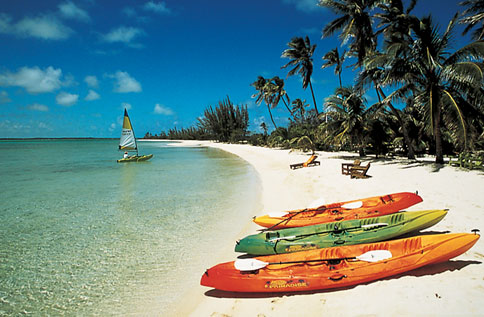
The Bahamas is the most sought-after Caribbean destination among US west coast and central markets for a leading travel website’s clients, with this nation urged to “tell the story” of its individual islands and create an ‘urgency’ to visit.
Elizabeth Parsons, vice-president of business development for Travelzoo, revealed in a recent presentation to the Bahamas Hotel and Tourism Association (BHTA) that a survey of its US members showed this nation was the top-ranked destination for Los Angeles and Houston-based travellers.
The March 2015 survey, which collected responses from nearly 5,000 American Travelzoo members, found that 38 percent of those based in Los Angeles rated the Bahamas as their ‘preferred’ Caribbean destination.
This percentage was more than double the next best nations, Cuba at 18 percent and Aruba at 17 percent.
And the Bahamas also led the way in Houston, with 20 percent of Travelzoo members in the Texan city ranking this nation as the Caribbean’s leading destination.
This nation was also ranked second in the Chicago market, gaining a 20 percent share to Aruba’s 27 percent.
The data revealed in the Travelzoo presentation reveals that the Bahamas has a significant untapped US market beyond the traditional Florida and north-east ‘corridor’ that has generated the bulk of its one million-plus annual stopover visitors.
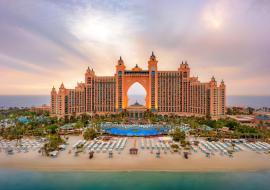
This growth potential in non-traditional US markets will become increasingly important as the Bahamas increases its hotel inventory via (hopefully) Baha Mar’s 2,200 new rooms, plus the return of the Holiday Inn on West Bay Street and the new Warwick property on Paradise Island.
The Travelzoo presentation indicated that, for many Florida and US east coast residents, they have already ‘been there, seen it, done it’ when it comes to the Bahamas.
This nation was ranked sixth in the Caribbean among Travelzoo’s Miami-based members, taking just 10 percent share. The Bahamas improved to fourth, and 15 percent, for Atlanta, and third - with a 13 percent share - among New York-based travellers.
Ms Parsons’ presentation said the Bahamas’ tourism strengths lay in its airlift capacity and brand awareness. With the nation “united as a group” in promoting all islands. There was also a good variety of price points and hotel options.
Yet, with tourism source market diversification set to become increasingly important, Ms Parsons urged the Bahamas to “tell the islands’ story beyond the well-known hotels and share what sets them apart from all other Caribbean beaches”.
She cited Puerto Rico as an example, describing how it branded itself on the “two major points” of no passports being required and “one of the lowest airfares in the Caribbean”.
Ms Parsons also suggested that the Bahamas create urgency in the minds of stopover travellers to ‘visit now’, one potential tactic being to limit the booking window to two-three weeks during key travel periods.
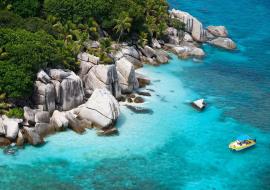
She added that the Bahamas needed to think beyond the Caribbean, and determine how it could compete with rival high-end, luxury destinations such as Bora Bora, Hawaii, Tahiti, Seychelles and the Maldives.
Easily understood offers and “simple booking pages” offered by hotels were also key.
The Travelzoo presentation confirmed that Bahamian destinations outside Nassau/Paradise Island and Grand Bahama were not well known among Americans, suggesting branding efforts for the Family Islands must be intensified.
Of Travelzoo’s near-5,000 survey respondents, 67 percent or two-thirds said they were familiar with Nassau, while 37 percent knew Grand Bahama and a further 33 percent were aware of Paradise Island.
Yet, when it came to the Family Islands, just 8 percent of survey respondents knew of Bimini, with 7 percent aware of the Exumas. Only 4 percent said they were familiar with other Family Islands.
When asked which Bahamian islands they would visit, 63 percent of the Travelzoo survey respondents said it would “depend on the deal” being offered - indicating that stopover travel, and this nation, remain extremely price sensitive.
Some 32 percent of Travelzoo’s responding US members said they would visit both Nassau and Paradise Island, with 28 percent saying they would travel to Grand Bahama.
A further 17 percent said they were prepared to visit Bimini and other Family Islands, with 15 percent willing to travel to the Exumas.
The Travelzoo survey findings come as the Nassau/Paradise Island hotel industry has enjoyed its “best quarter performance for seven years” during the first three months of 2015, with occupancies ahead of year-before comparisons through April.
For the two months to end-February 2015, average Nassau/Paradise Island occupancy rates stood at 70.5 percent compared to 62.3 percent in 2014.
And the improvement continued through the next two months, informed sources subsequently told Tribune Business, with average occupancy rates of 85 percent and 81 percent for March and April 2015, respectively, continuing to remain ahead of their 2014 comparatives of 80 percent and 75 percent.
As for revenue per available room (RevPAR), the Nassau/Paradise Island hotel industry saw an almost-$36 increase for the first two months of 2015, with this indicator rising from $153.35 to $189.08.
And average daily room rate (ADR) for the period to end-February stood at $268.11, compared to $246.20 the year before, indicating some pricing power has returned to the market,
For the first two months of 2015, this translated into a collective 11 percent room revenue increase for Nassau/Paradise Island hotels, with air arrivals and room nights sold up year-over-year by 9 percent and 2 percent, respectively.
Source: Tribune 242 (The Bahamas)