
Florida Keys Poised to Market Travel to, from Cuba
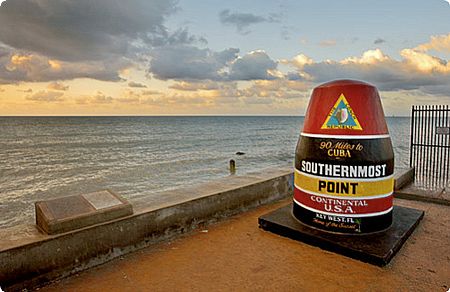
A full lifting of the U.S. travel ban to Cuba would seem to be a good thing for the nearby Florida Keys.
But tourism officials there view that possibility as a double-edged sword. Last fall, even before the recent detente between Cuba and the U.S., the Keys Tourist Development Council rolled out a marketing plan to be enacted in case the ban is lifted. Its tag line: "Two Nations, One Vacation."
A goal of the plan is to sell the Keys and Cuba as a joint itinerary, especially to European tourists. But Keys officials are also concerned that an open Cuba could eat into their domestic tourism business.
"The main objective for advertising efforts that address the opening of Cuba is to protect the existing Florida Keys domestic business from potential attrition due to the novelty and curiosity of this country," the plan reads.
It calls for protecting that business by aggressively targeting the in-state market as well as markets such as New York and California, where research has shown that audiences have the most interest in Cuba.
So far, however, even as diplomatic ties between the two nations have resumed at a breakneck speed over the past seven months, that marketing plan remains on the shelf.
"In terms of mass, free-flow travel, nothing has changed," said Andy Newman, public relations director for the Monroe County Tourist Development County.
Only a formal end to the travel ban, which must be passed by Congress, would signal that the time is right to deploy the marketing plan, he said.
In the meantime, officials and business leaders in the Keys are focusing on developing the infrastructure to support travel to and from Cuba. With the Key West cruise terminal already operational, and its airport already a designated port of entry and exit for Cuba, those efforts have mainly been focused on ferry travel.
In May, six companies received permission from the Office of Foreign Assets and Control to run ferries between the U.S. and Cuba. Each of those companies must still receive a series of permits from both countries. But with Key West lying just 100 miles from Havana, it's an obvious route for ferry operators.
Michael Reckwerdt, who owns Robbie's Marina on the Stock Island waterfront, just five miles from downtown Key West, says that he has already entered into three nondisclosure agreements with companies inquiring about running a ferry from his docks.
At Robbie's or elsewhere, the opening of ferry service can only come after construction of an approved customs facility at the terminal. The Historic Seaport in Key West, which currently plays host to ferries that travel to Fort Myers and Dry Tortugas National Park, doesn't have such a facility. So in May, the city commission tasked its staff with investigating whether there is enough space to build one.
Offering passenger service to Cuba directly from the popular Historic Seaport would be a boon to the Southernmost City, Mayor Craig Cates said. Being prepared, he added, is key.
"We've been talking about it opening for 30 years, and the last 10 years they thought it was really close," Cates said. "Now we feel like it is inevitable."
Source: Travel Weekly