Jamaican Town Builds Inspiring Sustainable Tourism Model
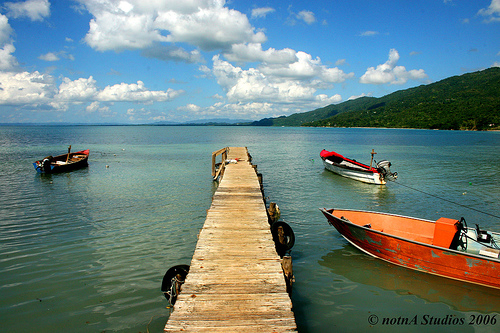
The town of Bluefields, Jamaica, is best known as the home of Peter Tosh, an original member of Bob Marley and the Wailers. But in recent years, Bluefields has also built up a profile as a hidden seaside paradise of pristine white beaches, unspoiled by roves of peddlers hawking shell necklaces and hair braiding.
The people of Bluefields say they have built a sustainable model for tourism that can inspire the nation and keep more foreign money on the island.
It would be a desperately needed change. Tourism in Jamaica is worth about $2 billion (1.5 billion euros) a year, making it the biggest source of foreign exchange in the country. But most visitors come as part of package deals. That means as much as 80 percent of their dollars leak out of Jamaica's economy, according to a 2011 study by the World Bank.
For just one example, hotel operators spent some $62 million on imported food in 2009, according to research conducted by the University of Florida. Now, the residents of Bluefields say they have a way to change the tourism economy and funnel its profits back to Jamaica.
Their flagship project is the Bluefields Bay Villas, a collection of six luxury properties set up for vacation rental 30 years ago. Each comes with a dedicated housekeeper, chef and a butler, but also with tables full of food from around the area.
Local farmers supply fruit and vegetables, while fishermen bring fresh catch straight to the kitchens. Guests often buy the exotic jams and hot pepper sauces offered with their meals.
Jamaica is home to about 2.7 million people. One of every nine citizens works in travel and tourism. So if the Bluefields model takes off, it could have wide-reaching impact for all the island's residents.
Besides serving tourists local fare, Bluefields is also carefully tending its natural resources. In the past the waters off the coast were overfished, but the villas worked alongside the community to create a marine reserve where fishing is banned. The sanctuary is now the largest on the island and its reefs an ideal spot for snorkeling and diving. To keep the sanctuary alive, fishermen volunteer to watch the 3,000-hectare site round the clock.
Two of them, Owen and Howard, had just returned from monitoring the reserve in an open boat. They said they saw a 700-pound fish, which would have been unheard of a few years ago.
The community, which has about 25,000 people, is looking at also going organic. But Wolde Kristos, manager of the Bluefields' People's Community Association, says the government could do more to promote the town.
The government says, however, it's looking to expand what's being done in Bluefields across the country.