U.S. "Immigrant Visa Freeze" Sparks Geopolitical Ripples Across Caribbean Markets
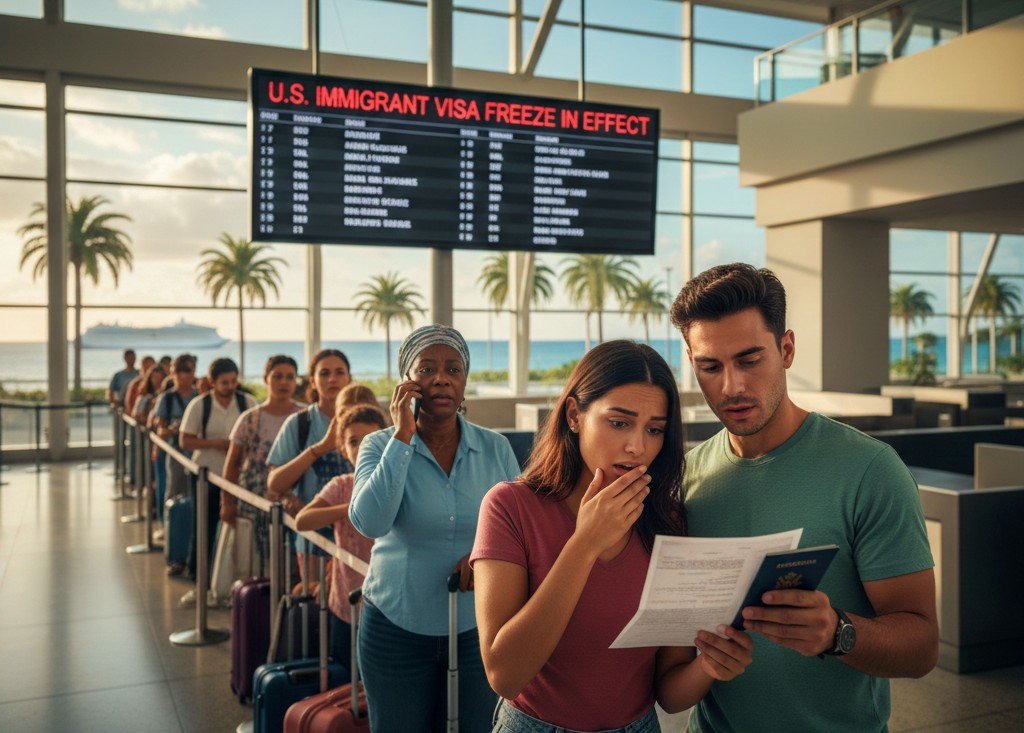
The landscape of international mobility has undergone a seismic shift this year following the U.S. Department of State's confirmation of a drastic new policy. Effective January 21, 2026, the United States will indefinitely halt the processing of immigrant visas for citizens of 75 different nations. This aggressive measure has sent shockwaves through the global travel sector and ignited intense diplomatic concerns across the Caribbean, where several island nations find themselves on the restricted list.
The directive originated from an internal memorandum later verified by official channels, instructing consular officers to deny permanent residency applications under strict public charge guidelines. The administration's central argument focuses on a comprehensive reevaluation of vetting procedures to ensure that new arrivals do not become a financial burden on American public benefit systems. This pause is intended to remain in place until the government can guarantee that immigration does not result in an "unacceptable" extraction of national wealth.
While the "freeze" is specifically targeted at those seeking a green card or permanent residency, the broader tourism economy is already feeling the secondary effects of the announcement. Confusion surrounding the new rules has created a climate of uncertainty, potentially discouraging travelers from major markets like Colombia and Brazil. Although non-immigrant visas for tourism and business are technically excluded from the suspension, market watchers fear that more rigorous screening and "bond requirements" for certain nationalities could redirect travelers toward Europe or Asia.
In response to the growing panic, the Caribbean region has moved quickly to protect its vital interests. The government of Antigua and Barbuda, for instance, issued an immediate clarification to reassure the public that the measure does not alter entry requirements for Americans visiting the islands. Tourism Minister H. Charles Fernandez emphasized that the country remains "open for business," working tirelessly to ensure that holiday demand and airline schedules remain unaffected by Washington’s shifting migratory policies.
However, the inclusion of several nations—including Jamaica, Bahamas, and Barbados—in the suspension list has created a complex legal limbo for thousands of families. While visas issued before the January 21 deadline remain valid for travel, all pending applications and new requests for residency have been stalled. This lack of a clear timeline for the review process has left legal advisors and applicants in a state of high anxiety, waiting for further guidance from U.S. consulates.
The ripple effect also extends to the hospitality partners in the U.S., who are still adjusting to a decline in Canadian visitors following recent tariff disputes. The potential loss of over 3.4 million annual visitors from the affected Latin American and Caribbean countries represents a significant risk to the economic recovery of many American leisure gateways. Industry experts warn that the perception of "closed borders" could have long-term consequences for the United States' standing as a top-tier destination.
Ultimately, 2026 is shaping up to be a year of profound geopolitical readjustment. As the United States reinforces its sovereignty through strict economic and security criteria, the rest of the world is left to navigate the resulting disruption to international connectivity. For the affected nations, the challenge will be to maintain operational stability and diversify their own tourism bases while the U.S. completes its indefinite review of the global immigration landscape.