"Agentic AI" Becomes the Invisible Hand of 2026 Trip Planning

A comprehensive report released today by Amadeus and Simon-Kucher has confirmed that "Agentic AI" has officially moved from a "experimental tool" to the core infrastructure of the global travel industry.
According to the data, over 60% of all international itineraries in early 2026 are being influenced or fully "assembled" by autonomous AI agents. Unlike the chatbots of 2024, these new agents are "action-oriented," meaning they can navigate multiple platforms to secure real-time pricing, manage reward points, and even "self-correct" a trip when a flight is canceled.
This "structural shift" is fundamentally changing how travelers interact with online travel agencies (OTAs). The report highlights that Gen Z and Millennial travelers are leading the charge, using "AI queries" to build day-by-day itineraries that include everything from niche restaurant reservations to "off-the-beaten-path" hiking routes. These AI agents are capable of "cross-platform optimization," checking reviews on Reddit and YouTube while simultaneously monitoring price fluctuations on Google Flights, ensuring a level of "personalization" that was previously impossible.
For the hospitality industry, the rise of agentic AI is a "double-edged sword." On one hand, it allows hotels to engage in "hyper-predictive personalization," anticipating a guest's needs before they even arrive. On the other hand, it forces properties to adopt "dynamic, value-based pricing" just to stay visible to the AI's "scraping algorithms." Properties that fail to integrate AI-friendly APIs into their booking engines are finding themselves "ghosted" by the very systems that are now driving the majority of global travel traffic.
The report also identifies a new trend called "Travel Mixology," where AI agents blend different travel styles—such as combining a "budget flight" with a "luxury boutique hotel" and a "local community tour"—to create a single, seamless bundle. This "composable travel" model is dismantling the traditional "static fare ladders," as AI systems prioritize "user intent" over airline-dictated packages. In 2026, the traveler is no longer buying a "product"; they are buying a "curated solution" designed by an algorithm that understands their specific "travel DNA."
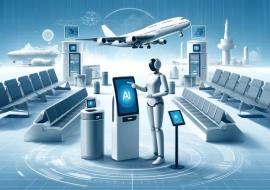
The "AI Revolution" is also making its mark on the "in-trip experience." At airports and "smart cities," AI-powered agents are being used to manage "flow and friction," directing travelers to the shortest security lines or suggesting the best "language-appropriate" digital signage. This "Predictive Care" is becoming a standard expectation for the 2026 traveler, who views technology not as an "add-on," but as a "mandatory layer" of safety and convenience.
As of today, February 16, the data shows no sign of this trend slowing down. For the travel industry, the message is "evolve or be bypassed." The era of "human-led" search is ending, replaced by an "Autonomous Ecosystem" where the "Invisible Hand" of AI is the one holding the passport. Whether you are a small B&B in Italy or a global airline, your "digital visibility" is now your most valuable asset.